



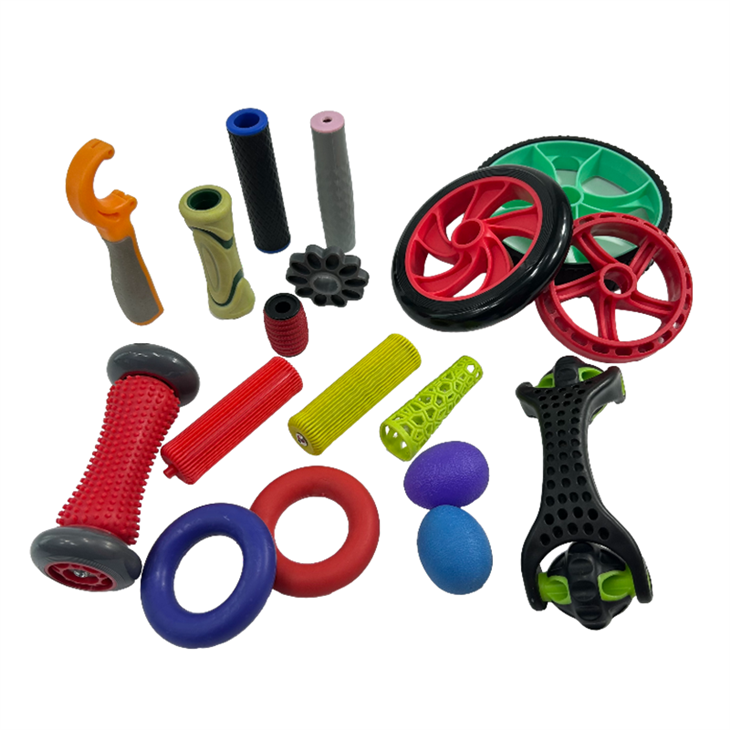


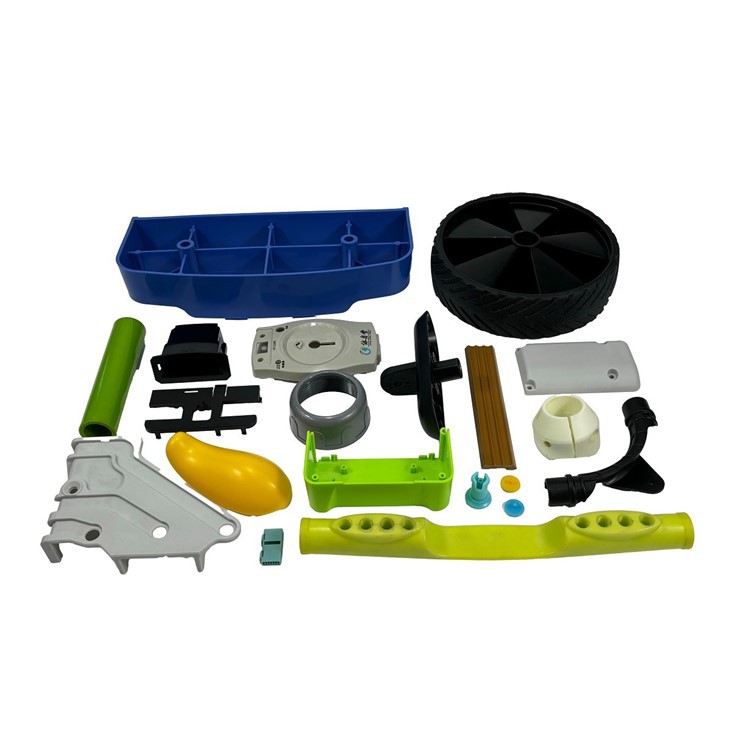
Products Details

The design and manufacturing quality of the injection mold directly determines the appearance and quality of the product, and the number of times a good mold is used is 500,000~1,000,000 mold times. The price of a single product can be significantly reduced by a single mold manufacturing.
Structural components of injection mold:
Mold Cavities and Cores: determine the external shape and internal structure of the product.
Pouring System: Distributes the molten plastic evenly into the mold cavity.
Cooling System: helps the molten plastic to cool down quickly for molding.
Demolding System: Ejects the product and completes the production cycle.
Want to know more? Feel free to contact us and let injection molding add unlimited possibilities to your project!
Key Factors in Injection Molding Tool Design
Product Requirements
1.Product size, shape, and functional requirements.
2.Surface quality requirements (e.g. gloss, texture).
Material selection
Properties of plastic materials such as fluidity, shrinkage, and high-temperature resistance.
Mold life
1.Wear resistance and hardness of the mold material (e.g. P20, H13 steel, etc.).
2.Surface treatment process (e.g. chrome plating, nitriding) to extend the service life.
Processing precision
Ensure precision fit between mold parts to avoid defects such as flying edges and warping of products.
Cooling efficiency
Cooling system design directly affects molding cycle time and production efficiency.
Production efficiency
Whether to use multi-cavity design, automated demolding, etc. to improve production speed.
Injection molding average service life reference
| Mold type Average | Aluminum mold |
| Ordinary steel mold | 500,000~1,000,000 die times |
| High quality steel mold | 1,000,000~2,000,000 die times and above |
| Aluminum mold | 10,000~100,000 die times |
More detailed data below
| Main Product | Plastic injection mold,Medical part mold,IML/IMD,2K injection mold,Silicone rubber mold,Die casting,Prototype,CNC Milling, CNC turning... |
| File Format | Solidworks,Pro/Engineer,Auto CAD,PDF,JPG,Sample |
| Plastic Material | HIPS ABS, PC, PP, PS, POM, PMMA,PE,AS,PPSN,PBT,PA66,PC/ABS.etc |
| Moulds' lead time | 20-35days,it depends on the product's size and structure |
| Bulk production lead time | 25-30days,it depends on the product's size and structure |
| Product's weight range | 1g to 5000g |
| Mould Precision | +/-0.01mm |
| Mould Life | 300k-500K shots,update moulds for free |
| Mould Cavity | Single cavity, multi-cavity. |
| Runner System | Hot runner and cold runner. |
| Equipment | 1.Tooling Development Machinery : Swiss Mikron High Efficiency Machining Center, Swiss Mikron High Speed CNC Machining Center,Japan Makino CNC Milling Machining Center,Taiwan Well Head CNC Machining Center,Swiss Charmilles EDM Machining Center,Japan Makino EDGE 3S Sinker EDM...2.Component Finishing Machinery: Henghui Sing & Bio-Padding Machine,100,000 Grade Oil Spraying Line... 3.Injection Machenery: TOYO Fully Electric Injection Molding Machine Si-Five,YIZUMI Injection Machine,DONGHUA Injection Machine,HAITIAN Machinery,SUMITOMO Injection Machine,HAITIAN Double Molding Machine... |
| Injection machies equipments | According to product precision to choice the different model 80T,120T,250T,450T,800T,1200T injection machine. |
| Surface Treatment | Polishing,Painting,Chroming,Anodizing, Brushing, Silk Screening,Water Transfering, Laser Cutting,Leather Covering,Texture, Sanblasting,Gilding, UV Painting… |
| Color | White, black, red, blue..et. according to customer's requirement. |
| Inspection | 100% inspection by QC, QA before shipping. |
| Applications | All kinds of cars spare part , machinery, home appliance, electronic products, medical devices, stationery, computers, power switches, miniature switches, architecture, commodity and A/V equipment, hardware and plastic molds, sports equipment and gifts,and more. |
| Quality Control System | ISO9001 quality management system certification. |
| Package | According to customer's requirement |
Our Services

Injection Molding Design & Engineering
1.Mold design with 4 engineers with 5-10 years of experience
2.3D Solid Modeling
3.Adaptation of process parameters
4.Mold flow analysis

Injection Molding Making
1.In-house mold processing and manufacturing ("We never outsource!")
2.100+ world-class precision machining facilities
3.Tolerances of ±0.001mm
4.ISO 9001 certified standards

Plastic Parts Production
1.20+ 35 tons - 1200 tons injection molding machines
2.Hundreds of thermoplastic materials to choose from
3.Strict quality control: IQC, IPQC, FQC
4.Customized packaging and packing after injection molding
Types of Injection Molding Molds:
-
Classified by the Number of Mold Cavities:
-
Single-cavity Mold: molding one product at a time, suitable for small batches or high-precision products.
-
Multi-cavity Mold: molding multiple products at a time, improves production efficiency, suitable for mass production.
-
-
Classified by mold structure:
-
Two Plate Mold: simple structure, suitable for general plastic products.
-
Three-platen Mold: increase the separation function of the pouring system, suitable for complex products or multi-point feeding.
-
-
Classified by application:
-
Hot Runner Mould: Reduce waste and improve molding efficiency by heating the runner system.
-
Cold Runner Molds: traditional molds, are lower cost, but produce more scrap.
-

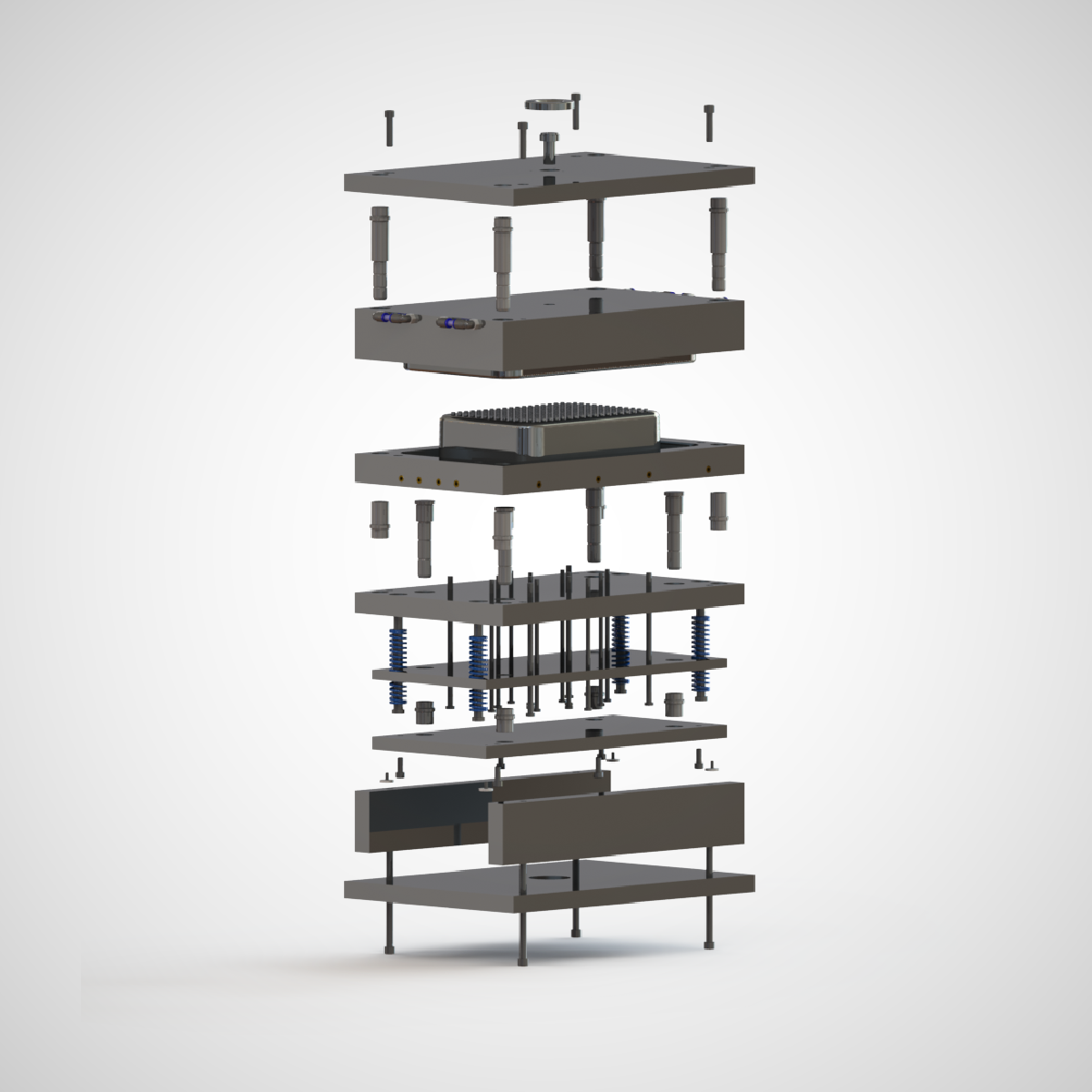
Structure of injection molding molds:
-
The Main Components of the Mold:
Dynamic and Fixed Mold: The mold consists of a dynamic mold (mounted on the moving template of the injection molding machine) and a fixed mold (mounted on a fixed template), which are closed to form a mold cavity.-
Cavity and Core: The cavity determines the shape of the product and the core forms the internal structure of the product.
-
Pouring System: Includes main flow channels, manifolds, gates, and cold pockets, which are used to transport the plastic melt into the mold cavity.
-
Cooling System: helps the molten plastic to solidify and mold quickly through cooling waterways.
-
Exhaust System: exhausts air or melt gas from the mold cavity to avoid defects.
-
Demolding System: including ejector pins, push plates, etc., used to eject the molded product from the mold.
-
-
Auxiliary Structure:
-
Guide Pillar and Guide Bushings: ensure the alignment accuracy of the moving and fixed molds.
-
Mold Base: Fixes and supports the mold components, providing strength and stability.
-
Advantages of Injection Molding Plastics
Rapid Prototyping: The shorter cycle time of injection molding is particularly suitable for batch production, and can complete the manufacture of large quantities of products in a short period.
The High Degree of Automation: automated production lines can significantly improve efficiency and reduce labor costs.
Low Unit Cost: For mass production, the unit cost is significantly reduced.
High Material Utilization: less material waste in the plastic injection molding process, and the trimmings can be recycled.
High Degree of Reproduction: enables the production of products with complex shapes and precise dimensions, such as parts with detailed features and internal structures.
One-piece Molding: enables integrated molding of parts, reducing assembly and subsequent processing steps.
High Precision: Injection molded products have high dimensional accuracy and consistency, making them suitable for manufacturing high-quality industrial parts and consumer products.
Raw Material Selection: A wide range of plastic materials can be processed (e.g. ABS, PP, PE, PC, etc.), even reinforced plastics with glass fiber and filler added.
Color Options: Multiple material combinations (two-color injection molding or multi-material injection molding) can be achieved for the same product.
Surface Options: injection molding can achieve a variety of surface effects, such as smooth, textured, or matte finishes, without additional processing.
Disadvantages of Injection Molding Plastics
Expensive Mold Cost: mold design and manufacturing costs are high, especially complex molds or multi-cavity molds.
Large investment in equipment: injection molding machines and other equipment are expensive, especially high-precision equipment.
Long Mold Cycle: Mold manufacturing requires a certain period, which may extend the product development time.
Product Suitability Testing: the product design and mold must be highly compatible, and require repeated verification and optimization in the early stage.
Lack of Material Clarity: Not all materials are suitable for injection molding (e.g., certain thermoset plastics and high-temperature materials).
Deformation Risk: the process is demanding for thin-walled and large-sized products, which may lead to warping, shrinkage, and other defects.
Processing Parameter Risk: Influenced by process parameters (e.g. temperature, pressure, cooling speed), the process is prone to problems such as bubbles, lack of material, warpage, etc., and requires strict control of process conditions.
Risk of Mold Design: Improper mold design may lead to shorter mold life or lower product quality.
High-volume Dependence: Not suitable for low-volume production, as the cost of molds can lead to high unit costs when spread over a small number of products.
Raw Material Risks: Some plastic materials are non-biodegradable and the resulting waste may hurt the environment.
Environmental Risk: The injection molding process may involve chemical additives or the emission of hazardous substances.
Applicable Scenarios
Suitable for Injection Molding Scenarios
Products that require high precision and complex structures (e.g., electronic product housings, medical device parts).
Mass-produced parts (e.g. automobile parts, daily necessities).
Products with high demands on appearance (e.g. consumer goods, home appliance housings).
Not Applicable to Injection Molding Scenarios
Small-lot, customized production.
Products where raw materials do not have environmental standards
Products with sensitive material costs or mold costs.
Injection Molding Plastics Classification
Injection molding plastic selection depends on the product requirements, the application, and the cost.
Thermoplastics
Thermoplastics are the most commonly used materials in injection molding because they can melt when heated, harden when cooled, and can be heated and cooled repeatedly.
ABS (Acrylonitrile Butadiene Styrene):
Characteristics: high strength, impact resistance, good surface gloss, easy to process.
Applications: electronic housings, automotive parts, toys, etc.
PS (Polystyrene):
Characteristics: high hardness, good transparency, easy to process.
Applications: appliance shells, packaging containers, toys, etc.
PP (Polypropylene):
Characteristics: high-temperature resistance, chemical resistance, lightweight, high strength.
Applications: food containers, automobile parts, medical equipment, etc.
PC (Polycarbonate):
Characteristics: transparent, high strength, high-temperature resistance, impact resistance.
Applications: electronic products, optical lenses, protective screens, automotive parts, etc.
PE (Polyethylene):
Characteristics: low-temperature resistance, good chemical stability, impact resistance.
Applications: pipes, containers, toys, etc.
PA (Polyamide, Nylon):
Characteristics: abrasion resistance, high-temperature resistance, high strength, good toughness.
Applications: mechanical parts, automotive parts, fiber products, etc.
POM (Polyoxymethylene):
Characteristics: high rigidity, wear resistance, good chemical stability.
Applications: gears, bearings, electronic parts, etc.
Thermosetting Plastics
Thermoset plastics undergo a chemical reaction during heating and become irreversible solids that can no longer be reheated and processed.
Bakelite (phenolic resin):
Characteristics: High strength, heat resistance, chemical resistance.
Applications: electrical switches, instrument housings, automotive parts, etc.
Epoxy Resin (Epoxy Resin):
Characteristics: excellent adhesion, corrosion resistance, high strength.
Applications: electrical and electronic components, structural parts, etc.
Polyester (Polyester Resin):
Characteristics: Good heat resistance, and good chemical stability.
Applications: ships, automobile interiors, construction materials, etc.
Engineering Plastics
Engineering plastics are plastics with excellent mechanical properties, heat resistance, and chemical stability, and are usually used for parts requiring high performance.
PBT (polybutylene terephthalate):
Characteristics: heat resistance, chemical resistance, low moisture absorption, good electrical properties.
Applications: automotive electronic parts, connectors, electrical insulation materials, etc.
PET (polyethylene terephthalate):
Characteristics: excellent chemical resistance, good mechanical strength, high transparency.
Applications: bottles, food packaging, electronic product shells, etc.
PEI (Polyetherimide):
Features: high heat resistance, good electrical properties, high mechanical strength.
Applications: aerospace, automotive high-temperature parts, medical devices, etc.
When selecting plastics for injection molding, it is necessary to choose the appropriate material according to the specific requirements of the product (e.g. strength, heat resistance, corrosion resistance, transparency, etc.). For most injection molding companies, commonly used thermoplastics such as ABS, PP, PC, PA, etc. offer greater flexibility and productivity during the product development phase.
Material Details Display Sheet
| Material | Recommended wall thickness [mm] | Recommended wall thickness [inches] |
| Polypropylene (PP) | 0.8 - 3.8 mm | 0.03'' - 0.15'' |
| ABS | 1.2 - 3.5 mm | 0.045'' - 0.14'' |
| Polyethylene (PE) | 0.8 - 3.0 mm | 0.03'' - 0.12'' |
| Polystyrene (PS) | 1.0 - 4.0 mm | 0.04'' - 0.155'' |
| Polyurethane (PUR) | 2.0 - 20.0 mm | 0.08'' - 0.785'' |
| Nylon (PA 6) | 0.8 - 3.0 mm | 0.03'' - 0.12'' |
| Polycarbonate (PC) | 1.0 - 4.0 mm | 0.04'' - 0.16'' |
| PC/ABS | 1.2 - 3.5 mm | 0.045'' - 0.14'' |
| POM (Delrin) | 0.8 - 3.0 mm | 0.03'' - 0.12'' |
| PEEK | 1.0 - 3.0 mm | 0.04'' - 0.12'' |
| Silicone | 1.0 - 10.0 mm | 0.04'' - 0.40'' |
Product Case Show


starway factory strength
Our free service hotline:+86 15821850866

13
years
We have been working in the industry since 2011
5
TEAMS
We have 5 teams which are a market development team, 4 processing workshops, a purchasing team, an engineering team, and a quality control team.
3
day prototype
We can prototype a product in as little as 3 days
If you are interested in our products or you wanna make and customize products, please feel free to contact us.
Hot Tags: injection molding plastics, China injection molding plastics manufacturers, suppliers, factory


