


1. What is Powder Coating?
Powder coating is a dry finishing process, representing over 15% of the total industrial finishing market. Used as functional (protective) and decorative finishes, powder coatings are available in an almost limitless range of colors and textures, and technological advancements have resulted in excellent performance properties.
2. How Powder Coating Works?
Powder coatings are based on polymer resin systems, combined with curatives, pigments, leveling agents, flow modifiers, and other additives. These ingredients are melt mixed, cooled, and ground into a uniform powder similar to baking flour. A process called electrostatic spray deposition (ESD) is typically used to achieve the application of the powder coating to a metal substrate. This application method uses a spray gun, which applies an electrostatic charge to the powder particles, which are then attracted to the grounded part. After application of the powder coating, the parts enter a curing oven where, with the addition of heat, the coating chemically reacts to produce long molecular chains, resulting in high cross-link density. These molecular chains are very resistant to breakdown. This type of application is the most common method of applying powders.
No matter which application process is utilized, powder coatings are easy to use, environmentally friendly, cost effective, and tough!
3. What is the durability of Powder Coating?
Powder coating is a high-quality finish providing a more durable finish than liquid paints can offer, while still providing an attractive finish. Powder coated products are more resistant to diminished coating quality as a result of impact, moisture, chemicals, ultraviolet light, and other extreme weather conditions. In turn, this reduces the risk of scratches, chipping, abrasions, corrosion, fading, and other wear issues.
It's tough. It looks great. And it lasts a long, long time. In addition to being durable, powder coating is an attractive choice due to environmental advantages.
4. How to choose the effect you want?
There are three things to consider when choosing your powder coating properties – colour, gloss level and texture.
Firstly, colour is simple to explain. There are an abundance of colours to choose from on our platform with RAL codes for specifying the exact needs.
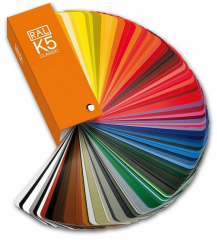
Secondly, the gloss levels in use are not uniform across all fabricators. There is always a gloss level in numerical form next to the description that may vary quite a lot between different suppliers. So we would advise to always look at that number rather than the description.
Matte

Matte is also known as flat, has a gloss level of around 30 (+/- 5%). While it does reflect some of the light, the reflection is faded and not clear-cut.
Suitable for hiding surface imperfections. It is important to note that a matte finish is harder to clean compared to higher gloss levels because of the surface flatness levels.
Gloss
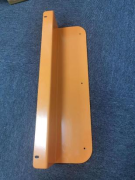
This is the most common gloss level that stands around 70 (+/- 5%). It is easier to clean that a matte finish and provides less surface friction.
The gloss finish leaves a nice reflection that is not very highly defined.
High gloss

Levels above 80 (+/- 5%). Very shiny and reflective. A high gloss also brings out any surface imperfections, so the metal surface itself should be very even and well finished to reach a great result.
Also, the smooth surface is perfect for cleaning which can play a big role in industries like medical and food processing.
Thirdly, texture.
Texture talks about decorative function of powder coating finish. There are mainly three classifications to choose from:
Sand texture, Wrinkle texture, Hammered texture

5. How can we help you with powder coating?
Starway is a group with more than 10 years experience in sheet metal fabrication and CNC machining industry.
Contact us for suggestions on your metal work!