



5-Axis CNC Machined Components
5-Axis CNC Machined Components
5-axis CNC machining is engineered for components that require machining from multiple directions or contain features that are difficult to reach with conventional 3-axis machinery.
-
![Custom 5-Axis Machined Aluminum Automotive Mold Part]() Custom 5-Axis Machined Aluminum Automotive Mold PartCustom 5-axis machined aluminum automotive mold parts are engineered for mold inserts, cavities, tooling components, and prototype tooling requiring complex curved surfaces, angled features, or...read more
Custom 5-Axis Machined Aluminum Automotive Mold PartCustom 5-axis machined aluminum automotive mold parts are engineered for mold inserts, cavities, tooling components, and prototype tooling requiring complex curved surfaces, angled features, or...read more -
![Complex Precision 5-Axis CNC Robotics Housing]() Complex Precision 5-Axis CNC Robotics HousingA robotics housing serves as the structural backbone of an automation system. It supports critical mechanical interfaces including bearing seats, motor mounts, gearboxes, shafts, encoders, and...read more
Complex Precision 5-Axis CNC Robotics HousingA robotics housing serves as the structural backbone of an automation system. It supports critical mechanical interfaces including bearing seats, motor mounts, gearboxes, shafts, encoders, and...read more -
![Precision 5-Axis CNC Machined Turbine Blade]() Precision 5-Axis CNC Machined Turbine BladeCustom 5-axis CNC machining for complex turbine blades, twisted airfoils, tapered sections, leading and trailing edges, and high-precision mounting features in high-performance alloys.read more
Precision 5-Axis CNC Machined Turbine BladeCustom 5-axis CNC machining for complex turbine blades, twisted airfoils, tapered sections, leading and trailing edges, and high-precision mounting features in high-performance alloys.read more -
![Custom 5-Axis Machined Titanium Medical Implant Part]() Custom 5-Axis Machined Titanium Medical Implant PartWe specialize in custom 5-axis CNC machined titanium components for orthopedic, spinal, dental, and bone fixation implant applications. We deliver fully traceable, high-precision parts engineered...read more
Custom 5-Axis Machined Titanium Medical Implant PartWe specialize in custom 5-axis CNC machined titanium components for orthopedic, spinal, dental, and bone fixation implant applications. We deliver fully traceable, high-precision parts engineered...read more -
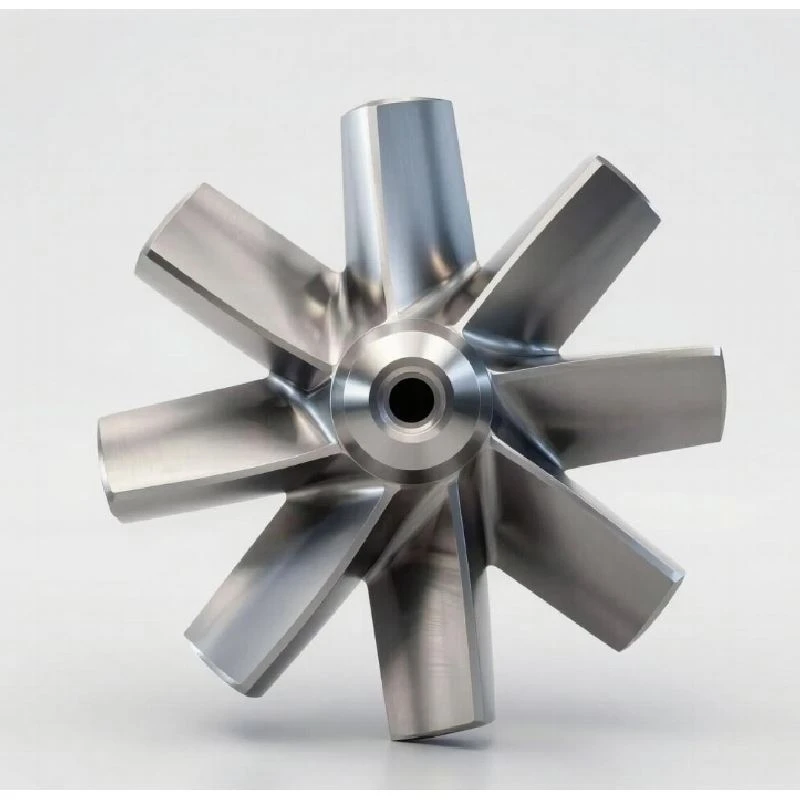
![Complex 5-Axis CNC Aluminum Impeller Component]() Complex 5-Axis CNC Aluminum Impeller ComponentWe manufacture custom 5-axis CNC machined aluminum impellers for complex blade profiles, curved hub transitions, and high-speed precision rotating assemblies.read more
Complex 5-Axis CNC Aluminum Impeller ComponentWe manufacture custom 5-axis CNC machined aluminum impellers for complex blade profiles, curved hub transitions, and high-speed precision rotating assemblies.read more -
![High Precision 5-Axis CNC Machined Aerospace Part]() High Precision 5-Axis CNC Machined Aerospace PartAerospace components frequently combine complex curved surfaces, angled features, deep pockets, thin walls, stiffening ribs, and closely positioned mounting interfaces. Machining these complex...read more
High Precision 5-Axis CNC Machined Aerospace PartAerospace components frequently combine complex curved surfaces, angled features, deep pockets, thin walls, stiffening ribs, and closely positioned mounting interfaces. Machining these complex...read more


Key Benefits of 5-Axis Machining
Fewer Setups
Machining multi-surface parts in fewer operations improves datum alignment and reduces operator loading errors.
Better Feature Access
Access compound angles, deep recesses, angled ports, and 3D undercut profiles directly.
Controlled Feature Relationships
Maintaining strict true position, perpendicularity, and runout between features on different faces is easier when processed in a single setup sequence.
Technical Specifications and Capabilities
|
Parameter |
Standard Capability |
Notes / Conditions |
|
Maximum Work Envelope |
800 mm x 600 mm x 500 mm |
Larger dimensions subject to engineering review |
|
Linear Accuracy |
Up to +/- 0.005 mm |
Feature and geometry dependent |
|
Angular Accuracy |
Up to +/- 0.01 degrees |
Rotary axis positioning accuracy |
|
As-Machined Surface Roughness |
Ra 0.8 - Ra 1.6 um |
Standard machining finish |
|
Fine Surface Roughness |
Down to Ra 0.4 um |
Achievable with specialized finishing toolpaths |
|
Production Volume |
1 - 500+ pieces |
Prototypes, low-volume, and production runs |
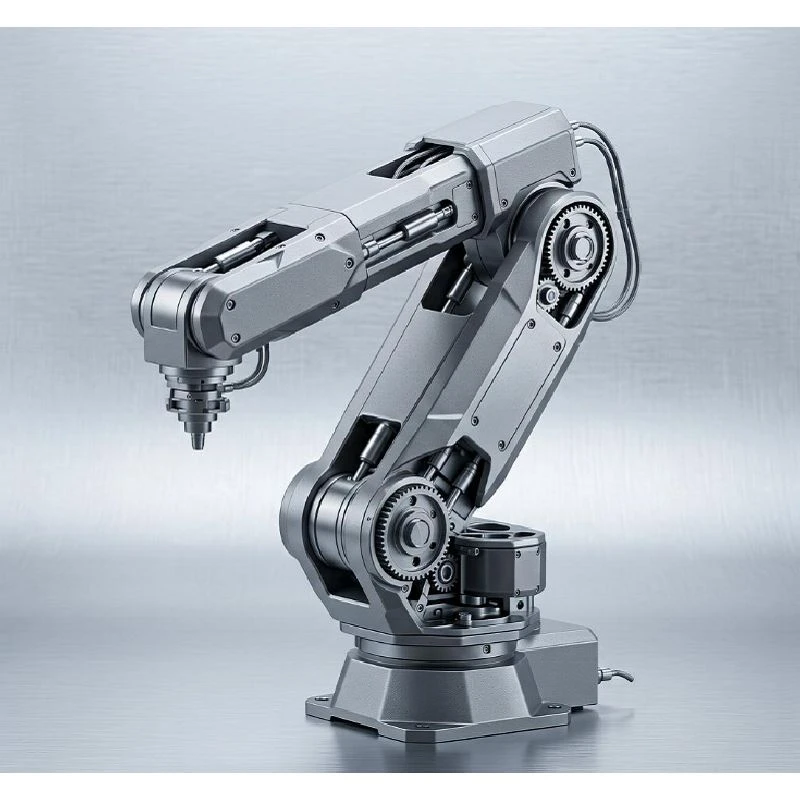
Multi-Face Features: Housings, mounting blocks, and brackets requiring accurate relationships across multiple surfaces.
Angled Holes and Ports: Fluid ports and angled mounting holes oriented away from primary machine planes.
Deep Pockets and Cavities: Narrow pockets reached using shorter, rigid tooling angled to prevent chatter.
Contoured 3D Surfaces: Complex aerodynamic profiles, blended curves, and non-planar mounting faces.
Precision Control and GD&T Verification
Dimensional accuracy is evaluated strictly from engineering drawings rather than broad marketing claims. Our process controls cover:
Linear tolerances and hole diameters
True position and coordinate locations
Orientation controls: Flatness, Parallelism, Perpendicularity
Form and Runout: Profile of a surface, Concentricity, Coaxiality
Materials
|
Aluminum Alloys |
6061-T6, 7075-T6, 2024, 5052 |
|
Stainless Steels |
304/304L, 316/316L, 17-4PH, 303 |
|
Steels and Alloy Steels |
Carbon Steel, 4140, 4340, D2 Tool Steel |
|
Copper and Brass |
C360 Brass, Tellurium Copper, Beryllium Copper |
|
Engineering Plastics |
PEEK, POM (Delrin), PTFE, Nylon (PA6/PA66), Polycarbonate (PC) |
Anodizing: Type II (Color/Clear), Type III (Hardcoat)
Chemical Conversion: Passivation for stainless steel, Chromate Film for aluminum
Plating: Electroless Nickel, Zinc, Gold/Silver Plating
Mechanical Finishing: Bead Blasting, Polishing, Brushing, Deburring
Protective Coatings: Powder Coating, Painting, Heat Treatment
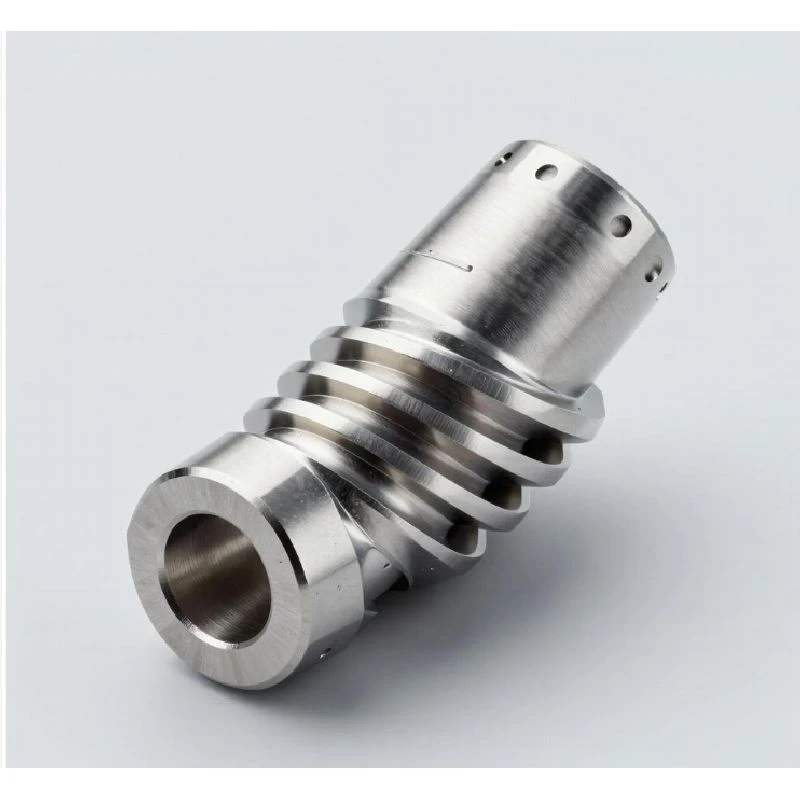
Robotics and Automation: Joint housings, actuator mounts, end-effectors, precision sensor brackets.
Aerospace and UAV: Lightweight structural brackets, sensor housings, contoured structural ribs, fluid manifolds.
Automotive and Motorsports: Custom engine mounts, performance brackets, prototype fluid manifolds.
Industrial Equipment: Valve bodies, pump housings, custom fixturing, heavy equipment machine bases.
Medical Devices: Enclosures, manifold systems, custom instrument components (material spec dependent).
FAQ
We're well-known as one of the leading 5-axis cnc machined components manufacturers and suppliers in China. If you are going to wholesale customized 5-axis cnc machined components at competitive price, welcome to get more information from our factory.